

Five Talent Changes That Build a Standout Company
I made all five to get my fourth company right.

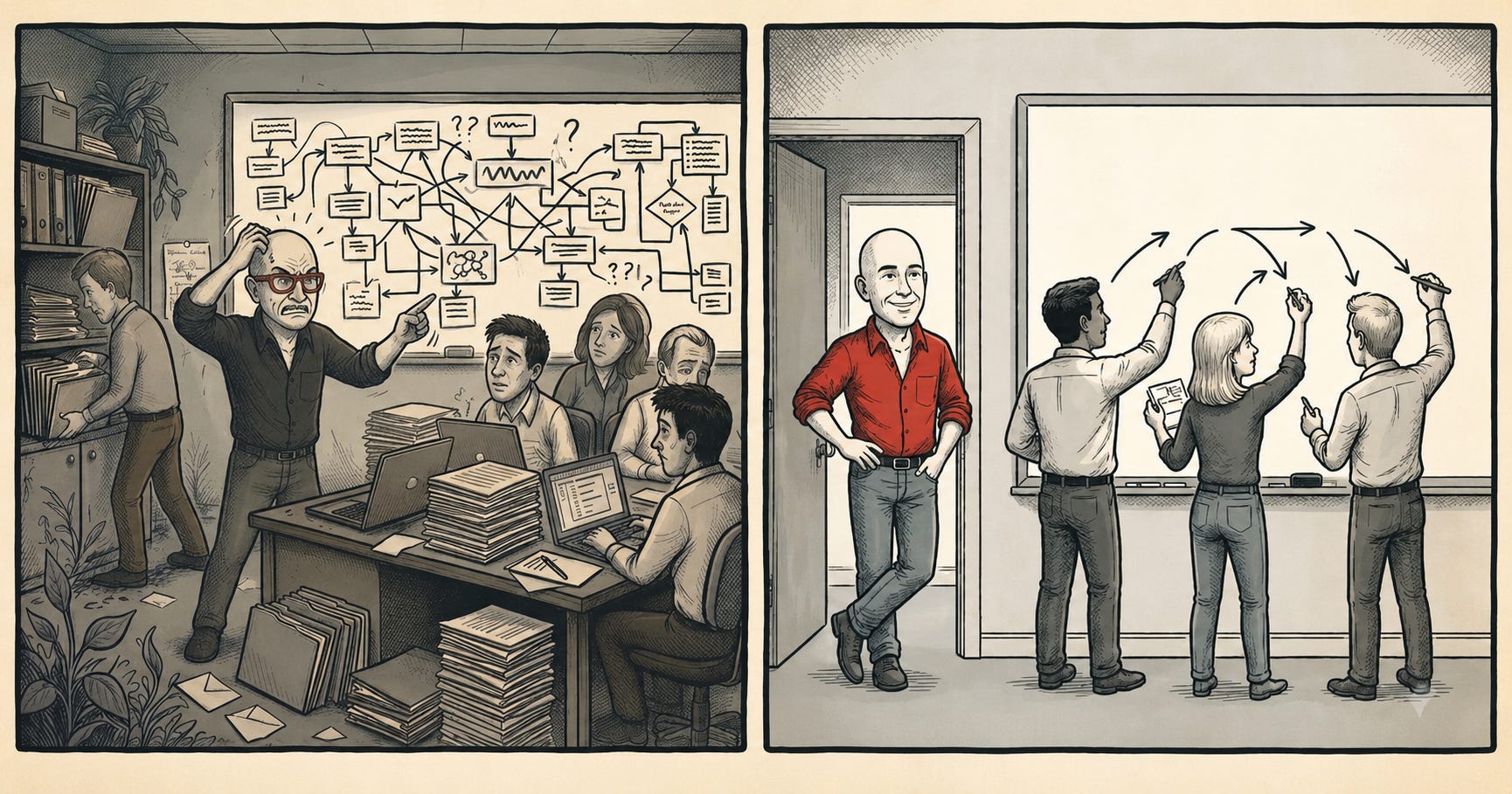
Work Better Now (WBN) is bigger and growing faster than anything I’ve built before. And I’m involved in fewer decisions than ever. That’s not a coincidence.
“WBN is bigger and growing faster than anything I’ve built before. And I’m involved in fewer decisions than ever.”
Looking back at the first three companies I started, I see a pattern I took too long to recognize. I was in the middle of almost everything, confusing activity with leadership. The fourth time around, I rewrote a few of those beliefs, and the payoff has been there.
I hoped for a culture. Now we’re building one.
In 2003 I started my first company. I’d just left a job with a culture I didn’t want to repeat, so I sat down and wrote out the kind of culture I wanted. Then the business got moving, my attention shifted to revenue, and culture became something that just happened around the edges. We ended up with a decent one, but nothing I’d shaped on purpose.
When my partner Andrew Cohen and I started WBN in 2018, we built it differently. We started with core values, and the first one is putting our talent first. That value comes into play everywhere, from how we hire to how we set and adjust compensation. It’s the foundation of our culture. Deeper take on culture-by-design here.
Culture is one of the biggest determinants of who joins your company, who stays, and how they work. Treat culture as a side project, and you’ll learn the hard way, usually after your best people are already gone, assuming you were able to hire high-performers in the first place.
I overlooked offshore for years. Now it’s most of our team.
Until 2013, I never considered offshore as a source of talent for my team. Freelancer marketplaces, sure, for one-off projects. But for the people who’d actually be on my team, I assumed those had to be local.
In 2013 I hired my first assistant, Jessica, from El Salvador. Her work ethic, her attitude, her output, all of it surpassed what I’d expected. The talent surprised me less than the realization that I’d written off an entire market by assumption.
So much so that we started WorkBetterNow to give other owners access to the same kind of talent. Today, about 75% of our team is based in Latin America, including about half of our leadership team.
Most owners look at offshore and think “cheaper.” I see access to people who, role for role, are top performers.
What I see in our team, I see in our clients’ teams too. Owners who have tried offshore found the same talent we did and haven’t looked back. The ones who didn’t are still wondering where their next great hire will come from.
I used to be in every decision. Now I’m in almost none.
For most of my career, I was in every meaningful call: every hire, every vendor decision, every software choice, every process change. Given my experience, that felt like the right move. I thought I was protecting the business. Really, I was making sure my team didn’t grow and signaling I didn’t trust them.
“I thought I was protecting the business. Really, I was making sure my team didn’t grow.”
Today, I’m rarely involved in operational decisions at all. Even on some strategic ones, I’ll share my view in the discussion, then step out before the call gets made.
This works because we built the team that could carry the decisions. Step out before that team is in place and you’ll slow the business down or possibly kill it. Just as importantly, I’m okay with them making mistakes, because that’s how they grow.
A few years back, the team was evaluating an applicant tracking system from a new software company. I had concerns about depending on a new entrant; I said so but let them decide. They went ahead, it didn’t work out, and we migrated off inside a year.
I’m not sure I would have made the same call. But they learned more from it than from one I’d have made. Today, those same people make better software decisions than I would. That kind of judgment doesn’t develop if you keep stepping in.
I treated salaries as expense. Now I see investment.
That distinction is more than semantic. It changes how my partner and I think about a hire and how we measure whether it worked.
In the past year, we hired:
A senior recruiter
A sales VP
A sales manager
8 salespeople
A senior leader for our talent coordinator team
That’s a lot of people and a lot of payroll.
Some were easy financial decisions; several stretched us. We made them anyway, even though it meant taking some hits on profit, because the sooner you make the investment, the sooner the returns compound.
I’m not suggesting that you absorb lower margin for new hires. Short-term profitability matters; you have to be honest about whether your business can afford it. There’s also a piece of the math most owners miss. Even with our best efforts, not every hire works out. When one doesn’t, you’re usually only on the hook for four to six months, not twelve. That changes the math.
Expense thinking asks what a hire costs this quarter. Investment thinking asks what they return over three years. Those are two different approaches to running a business.
“Expense thinking asks what a hire costs this quarter. Investment thinking asks what they return over three years.”
Growth’s other job: giving the team somewhere to go.
For most of my career, growth meant revenue, scale, and usually an increase in profits. Those things matter and they still do. What I didn’t see is what stagnation costs the people inside a business that isn’t growing.
A stagnant company plateaus in revenue. It also plateaus the careers of everyone inside it, especially the ambitious ones who feel a ceiling before they hit it. The best ones leave first, because they’re the ones who can.
Two of our current department heads started at WBN at the assistant level. They had capability that ran way ahead of their original positions, and growth gave that capability somewhere to land. Without growth, they’d have hit a ceiling years ago and we’d likely have lost them. Growth also brings cash flow, which lets you afford experienced hires who make a bigger impact sooner.
A great team is what makes growth possible, and growth is what gives the team somewhere to grow. Most owners think about the first part. The second part is what I missed.
The Common Thread
Strategy is important, and so is the team that executes it. These five lessons are about that team. Each points in the same direction: away from me and toward them.
A company that runs without you in every decision is a company finally working the way it should. Pick the lesson that stings most. That’s the one to start with.
The first three companies, I was building the business. This time, I’m building the team that builds the business.
Rob, this is good man - real good!